Skip to product information
1 of 2

Neobiotech

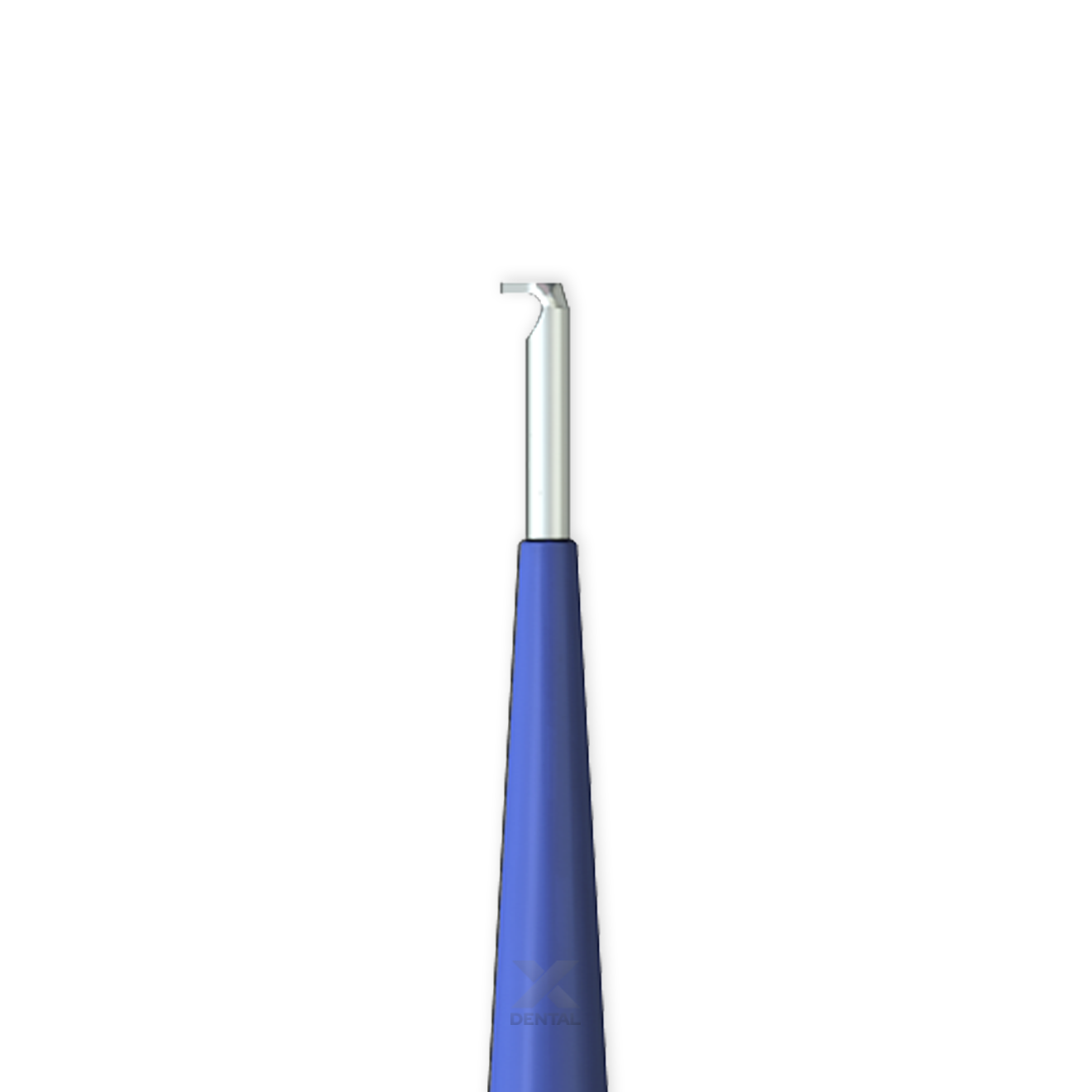
NeoBiotech i-Brush2

NeoBiotech i-Brush2

Regular price $400.00
Regular price Sale price $400.00
Sale Sold out
Amount
View full details
Neobiotech i-Brush II Implant Surface Decontamination Brush
Neobiotech · Peri-Implantitis

i-Brush II
Implant Scaler for Surface Decontamination

A non-surgical implant scaler designed for complete mechanical decontamination of infected implant surfaces. i-Brush II's L-shaped titanium alloy tip is engineered to contact every area of the implant thread pockets — reaching deeper inter-thread spaces across a wider debridement range than i-Brush 1, effectively restoring and preserving the rough surface architecture critical for re-osseointegration.

L-Shaped Titanium Alloy Tip Non-Surgical Peri-implantitis Treatment 2,000–10,000 rpm · 1:1 Handpiece
Clinical Insight

What clinicians are saying

Real-world feedback from implantologists using i-Brush II in peri-implantitis treatment.

"The L-shaped tip is the key difference — it gets into the thread pockets in a way a straight brush simply cannot. In moderate peri-implantitis cases where the bone loss extends across several threads, i-Brush II gives me reliable access all the way down without needing to raise a flap. The before and after on the SEM images tells the story clearly."

L-Shaped Tip · Thread Pocket Access · Non-Surgical Treatment

"What I value in a non-surgical decontamination tool is access and surface fidelity — I need it to clean the threads thoroughly without stripping the SLA texture that makes re-osseointegration possible. i-Brush II consistently delivers both. The titanium tip is rigid enough to debride effectively but doesn't compromise the surface structure underneath."

SLA Surface Preservation · Titanium Tip · Re-osseointegration
Resources

Clinical Documentation

NeoBiotech i-Brush1
Indications

When to use i-Brush II

Designed for non-surgical mechanical decontamination across a broader thread exposure range — where the L-shaped tip geometry enables complete inter-thread access that a straight brush profile cannot achieve.

Non-Surgical Peri-implantitis Treatment — Mechanical decontamination of the infected implant surface without flap elevation, suitable for cases where non-surgical intervention is the primary treatment approach.
Multi-Thread Debridement (1–5 Threads) — Extended debridement range across the coronal implant surface, covering 1–5 exposed threads — suited to moderate peri-implantitis with greater bone loss extent than i-Brush 1 is designed to address.
Inter-Thread Space Decontamination — The L-shaped titanium alloy tip is engineered to contact every area of the thread pockets and reach the inter-thread spaces that a straight brush profile or conventional scalers cannot access uniformly.
Pre-GBR Surface Preparation — Prepares the implant surface prior to guided bone regeneration by removing infected tissue and biofilm, creating a clean SLA surface for graft integration and re-osseointegration.
Bone Loss Arrest & Regeneration Support — Early and thorough mechanical decontamination prevents or arrests further peri-implant bone loss, creating the conditions for natural healing or adjunctive regenerative treatment.
Complementary Use with R-Brush — Used alongside R-Brush in surgical peri-implantitis cases — R-Brush addresses circumferential surface cleansing while i-Brush II handles the deeper inter-thread spaces and non-circumferential defect areas.
Scientific Evidence

Before & after: SLA surface decontamination

SEM imaging demonstrates the decontamination efficacy of i-Brush II on an infected implant surface — contamination removed, rough SLA architecture preserved.

Before i-Brush II

SEM image of infected implant surface before i-Brush II — contamination visible on thread surface

After i-Brush II

SEM image of implant surface after i-Brush II — contamination removed, rough surface architecture preserved
  • Contaminated implant thread surface cleared following i-Brush II mechanical debridement
  • Rough SLA surface architecture preserved post-treatment — critical for re-osseointegration following decontamination
  • The L-shaped titanium alloy tip contacts every area of the thread pockets, including inter-thread spaces not accessible with a straight brush profile
Clinical Case

i-Brush II in clinical use

A peri-implantitis case demonstrating i-Brush II non-surgical decontamination — from diagnosis through treatment.

Peri-implantitis — Non-Surgical Surface Decontamination

Peri-implantitis with thread exposure — i-Brush II applied for mechanical debridement of the infected implant surface

Specifications

Technical specifications

Device type Implant scaler for mechanical decontamination — peri-implantitis treatment
Tip design L-shaped Titanium alloy tip — engineered to restore the rough SLA topography by contacting every area of the thread pockets
Tip material Titanium alloy
Debridement range 1–5 exposed implant threads
Operating speed 2,000–10,000 rpm (1:1 low speed handpiece with irrigation)
Use Single patient use — disposable
Packaging 1 Box · 10 units
Manufacturer Neobiotech Co., Ltd
Origin Made in Korea
Clinical Tips

Getting the most from i-Brush II

Practical guidance for effective non-surgical implant surface decontamination.

1
Let the L-shaped tip geometry do the work. The tip is specifically designed to enter and contact every area of the thread pocket profile. Apply with steady, controlled strokes along the exposed implant surface — avoid excessive lateral pressure, which reduces tip contact precision in the inter-thread spaces.
2
Use with copious irrigation throughout. Maintain continuous saline or sterile water irrigation during i-Brush II application at all times. Dry use generates heat at the implant surface and surrounding tissue — this is particularly important at the higher end of the recommended speed range.
3
Select i-Brush II when the defect extends beyond 1–2 threads. i-Brush 1 targets coronal debridement at 1–2 threads. Where bone loss extends across 3–5 threads, i-Brush II's extended range and L-shaped tip design are better suited for complete surface coverage at depth.
4
Integrate into a comprehensive peri-implantitis protocol. Mechanical decontamination with i-Brush II removes infected tissue and biofilm from the implant surface but is most effective as part of a protocol that includes chemical decontamination, guided bone regeneration where indicated, and long-term supportive peri-implant maintenance.
5
Single patient use — do not resterilise or reuse. i-Brush II is a single-use disposable device. Reuse risks cross-contamination between patients and tip fatigue that reduces decontamination efficacy. Discard after each patient procedure.
⚠ Clinical Notice: i-Brush II is intended for use by trained dental surgeons in peri-implantitis treatment. Use with copious irrigation at 2,000–10,000 rpm via a 1:1 low speed handpiece — do not exceed the recommended speed range. Single patient use only — do not reuse or resterilise. Follow AS/NZS sterilisation and infection control guidelines for all instruments used in the same procedure. Refer to product labelling for full indications, contraindications, and handling instructions.