


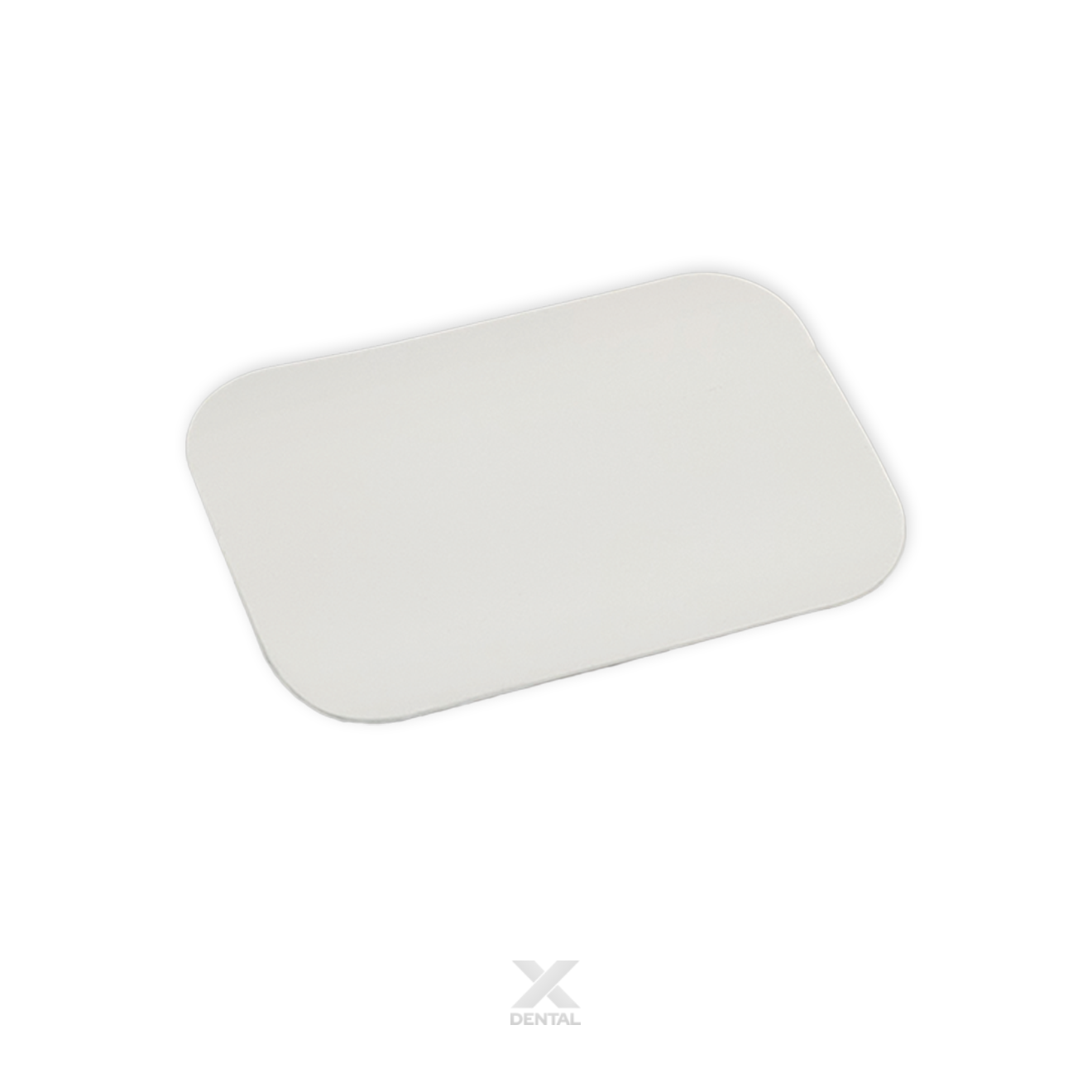

OpenTex®
Non-Resorbable PTFE Membrane
OpenTex® is a 100% medical grade, non-resorbable PTFE membrane with a microporous structure designed to remain a stable, predictable barrier even if exposed. Its smooth surface and small pore size resist soft tissue and fibroblast ingrowth, easing removal at re-entry — making OpenTex® a reliable choice for the Open Membrane Technique when primary closure isn't achievable.
What clinicians are saying
Real-world feedback from implantologists and periodontists using OpenTex® in their practices.
"What changed my approach to ridge preservation is not having to chase primary closure anymore. With OpenTex left intentionally exposed over a deficient socket, the membrane stays put, the site doesn't get infected, and by the time I'm ready for an implant the ridge contour is exactly what I needed."
"The microporous surface makes removal straightforward — there's minimal tissue ingrowth into the membrane itself, so I'm not fighting to peel it off the graft at re-entry. It's a small detail, but it changes how predictable the whole staged approach feels."
When to use OpenTex®
OpenTex® is suited to guided bone regeneration cases where large defects or thin gingiva make primary closure difficult or impossible.
Membrane design & published research
OpenTex® performance is supported by its validated material properties and by published clinical literature on PTFE barrier membranes for guided bone regeneration.
① Main Features
100% medical grade PTFE membrane. Prevents resorption of bone graft material, with validated physicochemical stability and biological safety.
Protects the tissue regeneration site even if the membrane is exposed. The procedure remains possible even when soft tissue is insufficient for full coverage.
Enhances interstitial fluid circulation and promotes gingival tissue attachment, while resisting penetration of foreign substances and fibroblast cell migration.
② Open Membrane Technique

Primary Closure

Non-Primary Closure
- OpenTex® is a good option for the Open Membrane Technique when the bone defect is large or the gingiva is thin so that primary closure is not possible
Reference: Rakhmatia YD, et al. Current barrier membranes: titanium mesh and other membranes for guided bone regeneration in dental applications. Journal of Prosthodontic Research. 2013;57(1):3–14. · Cucchi A, Ghensi P. Vertical guided bone regeneration using titanium-reinforced d-PTFE membrane and prehydrated corticocancellous bone graft. The Open Dentistry Journal. 2016;8:194.
OpenTex® size & surface options
OpenTex® is supplied in two standard sizes, in a Textured surface finish.
| Item No. | Size | Type |
|---|---|---|
| OpenTex_T01 | 24 × 30 mm | Textured |
| OpenTex_T02 | 17 × 25 mm | Textured |
Real-world clinical outcomes
Alveolar ridge preservation (ARP) using OpenTex® as an open d-PTFE membrane, from extraction through to implant placement.
Alveolar Ridge Preservation (ARP)
ARP with a d-PTFE membrane and freeze-dried irradiated allogenic bone substitute material in sockets with bone deficiency — reducing horizontal hard tissue resorption and the need for bone augmentation at the time of implant placement.

After extraction

During the grafting of bone substitute material and d-PTFE membrane placement

At flap approximation

1 month after alveolar ridge preservation

4 months after alveolar ridge preservation

At the time of implant placement
Source: Sun DJ, Lim HC, Lee DW. Alveolar ridge preservation using an open membrane approach for sockets with bone deficiency: A randomized controlled clinical trial. Clinical Implant Dentistry and Related Research. 2019;21(1):175–182.
Technical specifications
| Device type | Non-resorbable PTFE (dense PTFE, d-PTFE) barrier membrane |
| Material | 100% medical grade PTFE |
| Surface options | Textured |
| Pore structure | Microporous — resists soft tissue and fibroblast cell migration |
| Available sizes | 17 × 25 mm · 24 × 30 mm |
| Manufacturer | Purgo Biologics Inc. |
| Origin | Made in Korea |
Getting the most from OpenTex®
Practical guidance for predictable outcomes with the Open Membrane Technique.