Skip to product information
1 of 2

Supremo

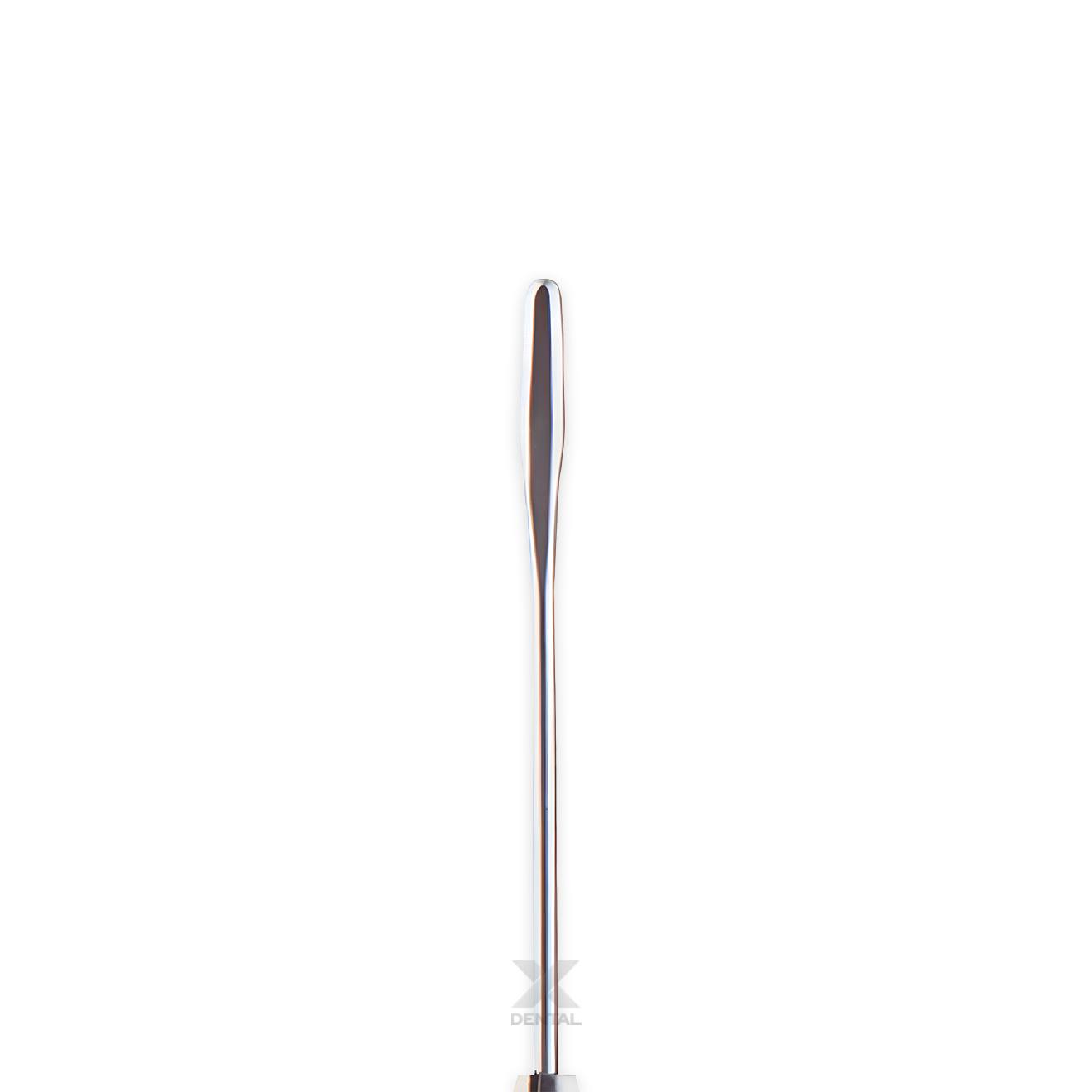
Supremo Tunnel Blade Micro-Blade 1Pack / 5units

Supremo Tunnel Blade Micro-Blade 1Pack / 5units

Regular price $290.00
Regular price Sale price $290.00
Sale Sold out
Option
View full details
SUPREMO Tunnel Blade® — Micro-Blade Tunneling Instruments: Arraia, Cacao, Espada
SUPREMO · Tunneling Solution

Tunnel Blade®
Tunneling Micro-Blades

Developed to deliver clean cuts and absolute control in tunneling procedures. Tunnel Blade® is a premium range of three individual micro-blade designs — Arraia, Cacao, and Espada — each optimised for a specific access technique and tissue phenotype. Their thin, sharp design enables minimally invasive approaches with maximum safety and efficiency.

3 Micro-Blade Designs 5 Blades per Box Handle Sold Separately
Clinical Insight

What clinicians are saying

Real-world feedback from periodontists and implant surgeons using Tunnel Blade® in soft-tissue tunneling procedures.

"The Arraia's back-action cut is genuinely different from anything else I've used in tunneling. In a modified VISTA approach, the ability to retract and sever muscle fibres in the same stroke — rather than pushing through them — gives me a cleaner recipient bed with far less micro-trauma. The preparation feels more controlled, and the tissue response reflects that at review."

Modified VISTA Access · Back-Action Cut · Recipient Bed Preparation

"For lower incisor cases with a thin, narrow sulcus, the Cacao is the only blade I'll reach for. It's small enough to enter without tearing the marginal tissue, and the classic shark profile gives predictable cutting in a single controlled stroke. I keep all three blades on the tray — the right micro-blade for each access point makes a real difference to how cleanly the tunnel develops."

Sulcular Tunneling · Thin Phenotype · Lower Incisor Access
Indications

When to use Tunnel Blade®

Designed for minimally invasive soft-tissue tunneling procedures — where precise micro-incisions and controlled tissue plane access are required.

Soft-Tissue Tunneling — Minimally invasive tunnel preparation through the mucosal or periosteal plane for connective tissue graft placement, without the need for vertical releasing incisions.
Root Coverage Procedures — Tunnel technique for recession treatment, including single and multiple recession defects, using connective tissue graft or collagen matrix placed through the tunnel.
Modified VISTA Access — Vertical incision supraperiosteal tunnel access — the Arraia (TB1) back-action blade is specifically optimised for this approach, facilitating muscle fibre division in the periosteal plane during VISTA preparation.
Sulcular Tunneling — Sub-marginal access through the sulcus for graft placement — the Cacao (TB2) reduced-dimension profile is designed for sulcular tunneling entry, particularly in thin or slender phenotypes.
Peri-implant Soft-Tissue Augmentation — Tunnel technique for improving keratinised tissue width or volume around implants, using connective tissue graft or collagen substitute delivered through a micro-blade prepared tunnel.
Gingival Volume Enhancement — Submucosal tunnel preparation for volume augmentation procedures, including biotype thickening prior to or following implant placement.
Micro-Blade Range

Three blades, three techniques

Each Tunnel Blade® is purpose-engineered for a specific access route and tissue context — select the blade that matches your surgical approach.

Micro-Blade Arraia TB1 — back-action cutting blade for VISTA access tunneling

TB1 · Micro-Blade Arraia

Back-action cut for cleaner tissue plane access

The Arraia blade offers a unique advantage in the world of microblades: its ability to cut with a retraction motion. This "back action" greatly facilitates the division of muscle fibres in the mucosal or periosteal plane, especially in modified VISTA ACCESS.

Blades with small cutting surfaces that cut only in lateral/frontal motions leave countless small fibres in their path, creating imperfections in the preparation of the recipient bed. The Arraia blade captures these fibres laterally and — with a gentle retraction motion — eliminates this interference.

Micro-Blade Cacao TB2 — reduced-dimension shark blade for sulcular tunneling access

TB2 · Micro-Blade Cacao

Classic shark profile — reduced for sulcular access

The Cacao blade is a classic microblade, but with reduced dimensions for sulcular tunneling access. Small and delicate, it is perfect for thin and slender phenotypes, even in the narrow contours of the lower incisors.

Micro-Blade Espada TB3 — pointed lancet-style blade for tunneling procedures

TB3 · Micro-Blade Espada

Precision point entry for controlled tunnel initiation

The Espada blade features a pointed, lancet-style tip engineered for precise initial entry and tunnel extension. Its thin, sharp profile maintains absolute control through the tunneling stroke, making it suited to sites where fine incision geometry and a clean entry point are critical to the procedure outcome.

Blade Comparison

Precision engineering for specific tissue profiles

Each individual box contains 5 sterile micro-blades of your selected design (Arraia, Cacao, or Espada) to maintain absolute cutting sharpness. The micro-blade handle is sold separately. Review the specifications below to select the exact blade geometry required for your surgical approach.

SUPREMO Tunnel Blade® — Micro-Blade Tunneling Instruments
Micro-Blade Arraia TB1 — isolated product shot
TB1 · Arraia
Back-action cutting motion
Modified VISTA ACCESS
Muscle fibre division
Micro-Blade Cacao TB2 — isolated product shot
TB2 · Cacao
Sulcular tunneling access
Thin & slender phenotypes
Lower incisor contours
Micro-Blade Espada TB3 — isolated product shot
TB3 · Espada
Precision point entry
Tunnel initiation & extension
Controlled incision geometry
Specifications

Technical specifications

Device type Tunneling micro-blades for minimally invasive soft-tissue surgery
Blades Options TB1 Arraia · TB2 Cacao · TB3 Espada (Sold as individual model boxes)
Quantity per box 5 blades of the same selected model per box
TB1 Arraia — cutting action Back-action (retraction) cut — mucosal and periosteal plane division
TB2 Cacao — intended use Sulcular tunneling access — thin and slender phenotypes, lower incisors
TB3 Espada — intended use Precision point entry — tunnel initiation and controlled extension
Handle Micro-blade handle not included — sold separately
Manufacturer SUPREMO
Origin Made in Brazil

Note: The micro-blade handle is not included and must be purchased separately. Each individual box contains 5 units of the identical chosen blade model for single-patient use.

Clinical Tips

Getting the most from Tunnel Blade®

Practical guidance for blade selection and tunneling technique.

1
Match the blade to your access technique — not just the site. Arraia (TB1) is specifically designed for modified VISTA and approaches requiring a retraction cut through the periosteal plane. Cacao (TB2) is the sulcular entry blade for thin phenotypes. Espada (TB3) suits precise initial puncture and tunnel extension where a fine lancet profile is needed. Using the correct blade for each step reduces tissue trauma and improves tunnel geometry.
2
Use the Arraia's back-action deliberately. The Arraia blade cuts on the retraction stroke — not the push stroke. Apply the blade with gentle lateral capture of the tissue fibres, then draw back with controlled pressure. Forcing the blade forward as you would with a conventional microblade negates the back-action advantage and risks tearing rather than cleanly dividing the fibres.
3
Keep stroke pressure light and consistent. The thin, sharp profile of all three blades is designed to cut with minimal applied force. Excessive pressure reduces tactile feedback and increases the risk of inadvertent perforation through the outer cortex of the tunnel. Let the blade geometry do the work — light, controlled strokes give more reliable tissue plane access than forceful ones.
4
For thin lower incisor phenotypes, use Cacao (TB2) exclusively at entry. In sites with narrow sulcular anatomy — particularly lower anterior teeth — the standard blade profile risks tearing the marginal tissue on initial entry. The Cacao's reduced dimensions allow sulcular penetration without stretching the tissue beyond its elastic limit. Once the entry point is established, the Espada can extend the tunnel apically if needed.
5
Single patient use — change blades between patients. Tunnel Blade® micro-blades are single-use instruments supplied as 5 units of the same model per box. Plan your procedural needs in advance; complex soft-tissue cases involving multiple advanced techniques (e.g., narrow sulcular entry followed by VISTA extension) will require utilizing fresh blades from their respective model boxes. Do not resterilise or reuse; the thin cutting edge fatigues after a single procedure, and blunt reuse significantly increases perforation risks.
⚠ Clinical Notice: Tunnel Blade® micro-blades are intended for use by trained periodontists and oral surgeons in soft-tissue tunneling procedures. The micro-blade handle is not included — confirm handle compatibility before use. Single patient use only — do not resterilise or reuse. Follow AS/NZS sterilisation and infection control guidelines for all instruments used in the surgical field. Refer to product labelling for full indications, contraindications, and handling instructions.